
Home Guides Secondhand Economy Guide: Buy & Sell Like a Pro
Secondhand Economy Guide: Buy & Sell Like a Pro
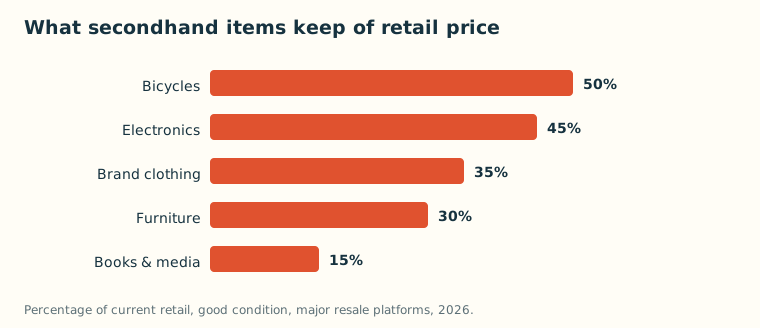
The secondhand economy has quietly become one of the largest retail channels in the world, and it rewards exactly two skills: knowing what things are worth, and knowing how to present them. Buyers who understand the first skill furnish homes at 60–70% under retail. Sellers who understand both turn a spring clear-out into several hundred dollars. This guide covers both sides, because in practice everyone fluent in the secondhand economy plays both.
What sells, and where
Different categories have different natural marketplaces, and listing in the wrong one is the most common beginner mistake:
- Furniture and bulky goods: local pickup platforms (Facebook Marketplace, Craigslist, neighbourhood apps). Shipping kills furniture economics; local listing with good photos does not.
- Brand clothing and accessories: dedicated resale apps (Vinted, Depop, Poshmark, Vestiaire for higher-end). Brand names in the title matter more than condition essays.
- Electronics: platforms with buyer protection (eBay, Swappa, Back Market for refurb). Serial numbers photographed, factory resets done, honest battery-health numbers.
- Books, media, hobbies: niche communities and specialist resellers beat general marketplaces — a film-photography forum moves a lens faster than a general listing at the same price.
The pricing rule
The default anchor is 30–40% of current retail for items in good, complete, working condition. Adjust from there: current-season and in-demand items hold 50–60%; anything requiring repair or missing parts drops to 10–20% or parts value. Check sold listings, not asking prices — the gap between what people ask and what buyers pay is where most listings go to die. Price at the sold average and you'll move items in days; price at the asking average and you'll re-list for months.
Listings that convert
Secondhand buyers can't inspect the item, so the listing has to do the inspecting for them. Four things separate fast sales from stale ones:
- Daylight photos against a plain background — eight angles for anything over $50, including the flaws. A photographed scratch builds trust; a hidden one builds returns and bad reviews.
- The model number in the title. Serious buyers search by model; "IKEA KALLAX 2x4 white" beats "nice shelf".
- Dimensions and measurements for anything that has to fit a room or a body.
- Reason for selling, one line. It answers the buyer's unspoken question — "what's wrong with it?" — before suspicion sets in.
Respond within the hour if you can. Secondhand platforms are velocity markets: the first two hours after listing bring most of the serious enquiries, and fast replies close deals before buyers wander off.
The buyer's checklist
Buying well is inspection, not luck:
- Electronics: power it on in front of you, test every port you'll use, check battery cycle counts and serial numbers against the listing. No power-on test, no purchase.
- Furniture: check joints, drawer runners and smells — smoke and damp are permanent. Bring measurements and a way to transport it; "I'll think about it" loses the good pieces.
- Clothing: ask for measurements, not sizes; check armpits, cuffs and zips in photos; know the brand's sizing quirks before you bid.
- Everything: if the price is implausible for the category, the item is a fake, faulty or a scam. Genuine bargains look like 40% off, not 90%.
Safety and fees
Meet in public or bring someone for home pickups; use platform payment systems rather than bank transfers to strangers; and treat any buyer who wants to "pay extra for shipping via their agent" as a scammer, because they are. On fees: platforms take 5–15% one way or another — selling fees, buyer protection fees, or promoted listings. Build the fee into your pricing from the start, and factor it into which platform deserves the listing.
The compounding effect
The secondhand habit changes your relationship with retail prices entirely: once you've sold a good item for 40% of retail, you stop paying 100% for things that don't need to be new. That cash flows straight into the goals that matter — a travel fund built on the tactics in our budget travel guide, or the daily habits in our 30-day frugal challenge. Sell three things this month. The first listing takes an hour; the third takes ten minutes, and the money is the same.