
Home Guides Grocery Store Psychology: 12 Tricks to Beat
Grocery Store Psychology: 12 Tricks to Beat
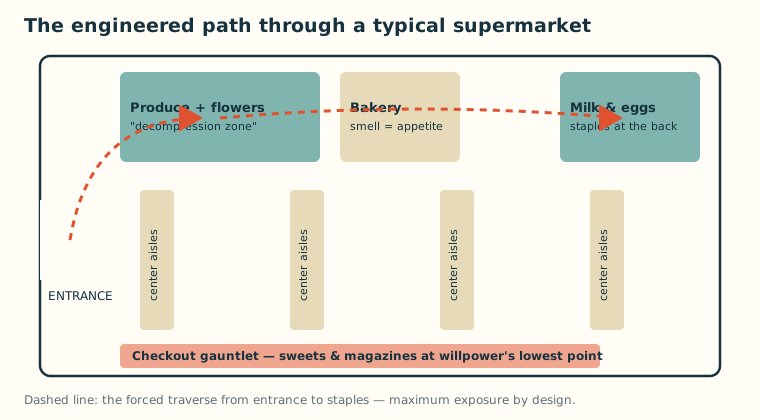
Supermarkets are among the most engineered environments you will ever walk into. Decades of behavioural research sit behind the layout, the lighting, the music tempo, the shelf heights and the smell of the bakery — all of it aimed at a single number: the size of your basket. None of this is secret; it's a published, professional discipline. And like any system built on predictable patterns, it can be read, anticipated and beaten. Here are the twelve tricks that matter most, each with its counter-move.
The layout machine
1. The produce decompression zone. You enter through fresh flowers and fruit — bright, fragrant, virtuous. It relaxes you and buys the store permission for everything that follows: shoppers who start with healthy purchases give themselves licence to splurge later. Counter: enjoy the apples, keep the list.
2. Milk at the back. Staples live at the far corners, forcing a full store traverse past thousands of products for one pint of milk. Every extra aisle is exposure. Counter: perimeter runs and top-ups between weekly shops — the system in our meal planning guide exists partly to minimise traversals.
3. The racetrack. The outer ring is designed as a one-way current pulling you past everything. Counter: treat aisles as destinations, not a tour — in, get, out.
The shelf machine
4. Eye level is buy level. The most profitable products sit at adult eye height; the budget own-label equivalents live at ankle level, and the sugary kids' products live at child eye height. Shelf position is bought and sold. Counter: shop top to bottom. The best value in the store is usually near your knees.
5. Endcaps aren't deals. End-of-aisle displays signal "promotion" so strongly that sales lift even when the price hasn't moved — and often it hasn't. Counter: compare the endcap price against the same product's shelf price, per unit, twenty steps away.
6. Shrinkflation. When raising the price is unpopular, the pack gets smaller: 500g becomes 450g at the same shelf price, a 12% rise wearing no label at all. Counter: unit pricing is the only honest number in the store. Compare per kilo or per litre, always.
7. The decoy middle. Three sizes priced so the middle one looks reasonable is classic anchoring — the large exists partly to make the medium sell. Counter: buy the size your household actually consumes; "value" that expires in the cupboard is waste at a bulk price.
The atmosphere machine
8. Slow music, warm light. Slow tempo slows walking speed, and slower walking means more browsing and a bigger basket. Counter: headphones and a list turn the ambience off.
9. The bakery smell. Scent is piped or positioned because it triggers appetite, and appetite buys. Counter: never shop hungry — this is the oldest rule on the list because it's the truest.
10. Free samples. Reciprocity is a powerful lever: a free cube of cheese creates a subtle obligation that a purchase resolves. Counter: take the sample if you want it; understand that it's a marketing cost, not a gift, and owes the store nothing.
The pricing machine
11. Loyalty "member prices". The two-tier shelf label makes the standard price a penalty and the discount a favour — while the app quietly builds your purchase profile. Take the member price if you shop there anyway, but know what you're trading, and don't let member-only deals steer the meal plan. The same discipline applies to every rebate layer — see our cashback stacking guide.
12. The checkout gauntlet. Sweets and magazines at the till target the exact moment your willpower is spent. Self-checkout's rise has dulled this one — use it. Counter: treat checkout as the finish line, not a shopping zone.
The meta-counter
Every trick above has an individual defence, but the system-level counter is simpler: a weekly plan, a written list, a full stomach and one trip. Stores are engineered for the wandering, hungry, unplanned shopper — which is precisely why the unplanned top-up trips we measured in our meal planning test cost $14 in unplanned spend each. Shop like the engineer of your own basket, and the machine works for you instead of on you.